
Blog
What Is in Energy Drinks?

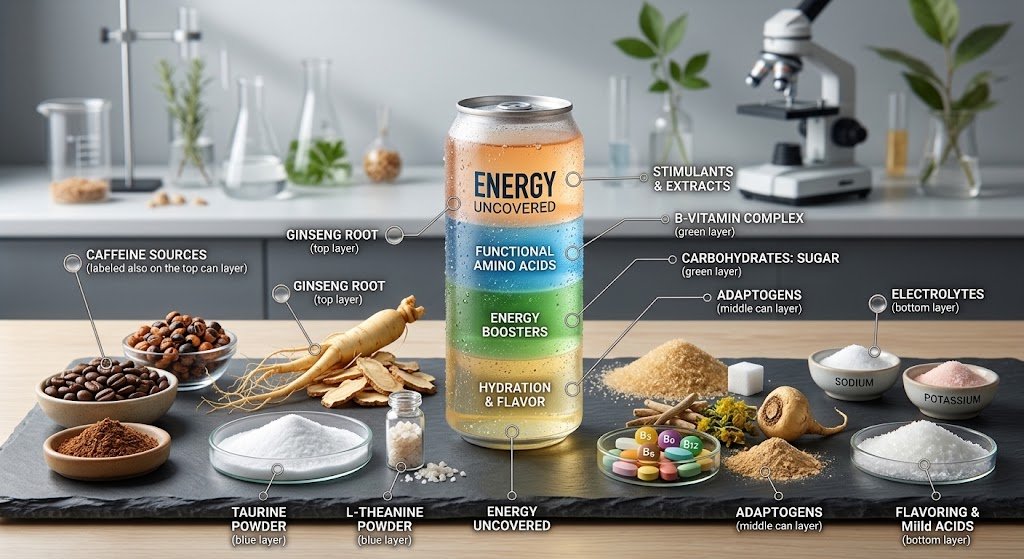
Most energy drinks contain caffeine, sugar or sweeteners, taurine, B vitamins and plant extracts like guarana and ginseng, plus acids, flavors, colors and preservatives. Of all of these, caffeine does nearly all the work. A typical can has 80 to 300 mg of it. The rest is mainly there for taste, shelf life and marketing.
That’s the short answer. To show you exactly what you’re drinking, we’ve taken the real ingredient lists from three popular cans (Monster Energy, Rockstar Pure Zero and Celsius) and explained every ingredient in plain English, with what the evidence says about each one.
Three Real Energy Drink Labels
Here’s what’s printed on three of America’s best-selling energy drinks.
Monster Energy Original (16 oz): carbonated water, sugar, glucose, citric acid, natural flavors, taurine, sodium citrate, color added, Panax ginseng extract, L-carnitine L-tartrate, caffeine, sorbic acid (preservative), benzoic acid (preservative), niacinamide (vitamin B3), sucralose, salt, D-glucuronolactone, inositol, guarana extract, pyridoxine hydrochloride (vitamin B6), riboflavin (vitamin B2), maltodextrin, cyanocobalamin (vitamin B12) (H-E-B).
Rockstar Pure Zero Silver Ice (16 oz): carbonated water, erythritol, acesulfame potassium, sucralose, taurine, glucuronolactone, guarana seed extract, Panax ginseng root extract, milk thistle extract, inositol and B vitamins, among others (Giant).
Celsius Raspberry Acai Green Tea (12 oz): a “MetaPlus” blend of taurine, guarana extract, caffeine, glucuronolactone, ginger extract and green tea extract (15% EGCG), plus filtered water, citric acid, natural flavor, fruit and vegetable juice for color and sucralose (H-E-B).
Notice how similar they are. Almost every energy drink is built from the same short list of ingredients, mixed in different amounts.
Energy Drink Ingredients at a Glance
| Ingredient | What it is | What it does | How much matters? |
|---|---|---|---|
| Caffeine | Stimulant from coffee, tea, guarana | Alertness, focus, less tiredness | The main active ingredient |
| Sugar / glucose | Simple carbohydrates | Quick calories and sweetness | Up to 54 g per can in full-sugar drinks |
| Sucralose, acesulfame K, erythritol | Zero- or low-calorie sweeteners | Sweetness without sugar | Used in “zero” drinks |
| Taurine | An amino acid | Marketed for energy and performance | Evidence for a benefit is limited |
| Guarana | Seed extract from a South American plant | Adds natural caffeine | Contributes to total caffeine |
| Panax ginseng | Herbal root extract | Marketed for energy and focus | Evidence in drinks is limited |
| B vitamins (B2, B3, B6, B12) | Essential vitamins | Help the body turn food into energy | Most people already get enough |
| L-carnitine | A compound involved in fat metabolism | Marketed for energy | Little evidence of a benefit in drinks |
| Glucuronolactone | A compound the body makes | Common in energy drinks | Little evidence of a benefit |
| Inositol | A sugar-like compound | Common filler ingredient | Generally regarded as safe |
| Green tea extract | Concentrated tea extract | Adds caffeine; basis of “metabolism” claims | Small effect |
| Citric acid, sodium citrate | Acids and buffers | Tartness and flavor | Safe in normal amounts |
| Sorbic acid, benzoic acid | Preservatives | Stop spoilage | Safe in approved amounts |
| Colors and natural flavors | Flavor and appearance | Taste and look | No energy effect |
| Salt / sodium | Electrolyte | Flavor; some drinks market hydration | Can reach 370 to 380 mg per can |
Ingredients from the labels above. Evidence notes summarize the UC Davis Nutrition and Health fact sheet on energy drinks, an older (2007) review, which found little or no evidence for most claimed benefits beyond caffeine. Sodium from H-E-B (Monster, 370 mg) and Giant (Rockstar Pure Zero, 380 mg).
The Ingredients That Matter Most
1. Caffeine: the real “energy”
Caffeine is a stimulant that makes you feel more alert and less tired. It’s the only ingredient in most energy drinks with strong evidence of an energy effect. Popular cans range from 80 mg (an 8.4 oz Red Bull) to 300 mg (Bang, Reign, Monster Killer Brew) (Barista Life; Caffeine Informer). The FDA says energy drinks range from about 54 to 328 mg per 16 oz (FDA).
The FDA cites 400 mg a day as an amount not generally linked to negative effects for healthy adults. See exactly where your favorite can falls in our ranking of energy drinks with the most caffeine.
2. Sugar: the biggest health difference between cans
Full-sugar energy drinks are, nutritionally, soda with caffeine. A 16 oz original Monster has 54 g of added sugar and 230 calories (H-E-B). That’s more than the American Heart Association’s suggested daily limit for added sugar for both women (about 25 g) and men (36 g), as summarized by MyFitnessPal.
“Zero” drinks swap sugar for sweeteners like sucralose, acesulfame potassium and erythritol. Rockstar Pure Zero uses all three and has 20 calories per can (Giant). If you drink energy drinks often, choosing a zero-sugar version is the single biggest health upgrade you can make. Our guide to the healthiest energy drinks ranks the options.
3. Taurine: famous, but not proven in drinks
Taurine is an amino acid your body makes and that you get from meat and fish. It’s in almost every energy drink, often in large amounts. Despite the marketing, there’s little evidence that the taurine in an energy drink gives you more energy; the UC Davis review found little evidence for its claimed benefits (UC Davis).
4. Guarana: hidden extra caffeine
Guarana is a seed from a South American plant that naturally contains caffeine, roughly 40 mg per gram according to UC Davis. In older drinks it could push the true caffeine total above the number on the label. Many US labels now list caffeine “from all sources,” which includes guarana. Monster’s label, for example, states 160 mg of caffeine from all sources (H-E-B).
5. B vitamins: real, but you probably don’t need more
Energy drinks are often loaded with vitamins B3, B6 and B12. Your body does use B vitamins to turn food into energy, but they’re not a stimulant, and most people already get enough from food. Extra B vitamins won’t make you feel more awake the way caffeine does.
6. Herbal extracts: ginseng, green tea, ginger, milk thistle
These appear in small, often undisclosed amounts. Monster and Rockstar include Panax ginseng; Celsius includes green tea extract and ginger; Rockstar Pure Zero includes milk thistle. When they’re part of a “proprietary blend,” the label doesn’t show how much of each is in the can. The evidence for most of them having a noticeable effect at these doses is limited.
7. Acids, preservatives and colors
Citric acid gives tartness, sodium citrate balances acidity, and sorbic and benzoic acid stop the drink spoiling on the shelf. These are common in sodas too. They’re the reason an unopened can lasts months; learn more in how long do energy drinks last?
What’s NOT in Most Energy Drinks
- Protein: energy drinks don’t contain meaningful protein. If you want recovery fuel, a protein shake like Core Power is a different product entirely.
- Fiber: essentially none.
- Alcohol: standard energy drinks are alcohol-free. Mixing energy drinks with alcohol isn’t recommended; the UC Davis review notes that people who did so performed as poorly on coordination tests as with alcohol alone but didn’t feel as intoxicated.
Are Energy Drink Ingredients Safe?
For healthy adults, the ingredients in mainstream energy drinks are considered safe at normal amounts. The real risks come from:
- Too much caffeine, from several cans or cans plus coffee. The FDA lists faster heartbeat, palpitations, high blood pressure, poor sleep, anxiety, jitters, stomach upset and headaches as signs of too much.
- Too much sugar, from regular full-sugar cans.
- Mixing with alcohol.
- The wrong drinker. Pediatric experts advise against energy drinks for children and teens, and labels warn pregnant or nursing women and caffeine-sensitive people.
Monster vs Celsius vs Rockstar: Key Ingredients Side by Side
| Monster Original | Rockstar Pure Zero | Celsius | |
|---|---|---|---|
| Size | 16 oz | 16 oz | 12 oz |
| Caffeine | 160 mg | 240 mg | 200 mg |
| Sugar | 54 g | 0 g | 0 g |
| Calories | 230 | 20 | 10 |
| Sweeteners | Sugar, glucose, sucralose | Erythritol, ace-K, sucralose | Sucralose |
| Taurine | Yes | Yes | Yes |
| Guarana | Yes | Yes | Yes |
| Ginseng | Yes | Yes | No |
| Green tea extract | No | No | Yes |
Want to know more about a specific drink? See what is Celsius drink? and how much caffeine is in Monster.
FAQs
What gives energy drinks their energy?
Mostly caffeine. Sugar adds quick calories in full-sugar drinks, but taurine, B vitamins and herbal extracts have little proven energy effect at the doses used.
What is taurine and is it safe?
Taurine is an amino acid found naturally in the body and in meat and fish. It’s widely used in energy drinks and considered safe at normal amounts, but evidence that it boosts energy is limited.
Do energy drinks have a lot of sugar?
Full-sugar ones do. A 16 oz original Monster has 54 g of added sugar. Zero-sugar versions like Monster Ultra, Rockstar Pure Zero and Celsius have none.
What’s the worst ingredient in energy drinks?
For most people, it’s the combination of high caffeine and high sugar in one can. Neither is harmful in small amounts, but both add up quickly.
Are energy drinks just caffeine and sugar?
Largely, yes. Caffeine and sugar (or sweetener) drive the effect and the calories. The other ingredients are mostly flavor, preservation and marketing.
Why do energy drinks have B vitamins?
B vitamins help the body turn food into energy, so they fit the “energy” message. They aren’t stimulants, and most people already get enough from their diet.
The Bottom Line
Energy drinks are mostly water, caffeine and either sugar or sweetener, with taurine, guarana, ginseng, B vitamins, acids and preservatives added. Caffeine does the real work; sugar is the biggest health difference between cans; most other ingredients have little proven effect. Choose a zero-sugar can with moderate caffeine, and count every can toward your 400 mg daily limit.
Shop energy drinks at DrinkWorlds → Zero-sugar Monster Ultra, Rockstar Pure Zero and CELSIUS by the case, with free US shipping on orders over $35.


